Buy ennoia.eu ?
We are moving the project
ennoia.eu .
Are you interested in purchasing the domain
ennoia.eu ?
domain@kv-gmbh.de · 0541-91531010
Buy ennoia.eu ?
Why is sustainability important in the textile industry in emerging countries?
Sustainability is crucial in the textile industry in emerging countries for several reasons. Firstly, these countries often lack strict environmental regulations, leading to high levels of pollution and resource depletion. Implementing sustainable practices can help mitigate these negative impacts on the environment. Additionally, consumers worldwide are increasingly demanding ethically produced and environmentally friendly products, making sustainability a competitive advantage for companies in emerging countries. Lastly, adopting sustainable practices can improve the overall well-being of workers in the textile industry by ensuring safe working conditions and fair wages. **
What is retail textile?
Retail textile refers to the sale of fabrics, clothing, and other textile products directly to consumers through physical stores or online platforms. This sector includes a wide range of products such as apparel, home textiles, and accessories. Retail textile businesses often source their products from manufacturers and wholesalers, and then sell them to individual customers for personal use. The retail textile industry plays a significant role in the global economy and offers a diverse array of products to meet consumer needs and preferences. **

Similar search terms for Textile
Top-Angebote
Products related to Textile:
-
Veer Decor Linea Textile WallpaperAdd refined texture and warmth to your walls with our Linea Textile wallpaper. Designed to mimic the quiet elegance of real linen, this wallpaper features a subtle horizontal emboss that captures the delicate weave and tactile richness of fine...169,99 $*Shipping: 0,00 $Secure redirect to the provider
-
Veer Decor Linea Textile WallpaperAdd refined texture and warmth to your walls with our Linea Textile wallpaper. Designed to mimic the quiet elegance of real linen, this wallpaper features a subtle horizontal emboss that captures the delicate weave and tactile richness of fine...169,99 $*Shipping: 0,00 $Secure redirect to the provider

-
Are these textile beetles?
Without a specific image or description of the beetles in question, it is difficult to determine if they are textile beetles. Textile beetles, such as the varied carpet beetle and the black carpet beetle, are known for infesting and damaging textiles, carpets, and other natural fibers. If you suspect that you have textile beetles, it is best to consult with a pest control professional for proper identification and treatment. **
-
Is textile dye toxic?
Some textile dyes can be toxic, as they may contain harmful chemicals such as heavy metals, formaldehyde, and azo compounds. These toxic chemicals can have negative effects on human health and the environment, especially if they are not properly managed during the dyeing process and disposal. However, there are also eco-friendly and non-toxic textile dyes available that use natural and sustainable ingredients, making them a safer option for both consumers and the environment. It is important for consumers to be aware of the potential toxicity of textile dyes and to choose products that are certified as non-toxic and environmentally friendly. **
-
What is a textile?
A textile is a flexible material made by weaving, knitting, crocheting, or felting natural or synthetic fibers. Textiles are used to create a wide range of products, including clothing, household items such as towels and bedding, and industrial products such as filters and reinforcements for composite materials. Textiles can be made from a variety of materials, including cotton, wool, silk, polyester, and nylon. **
-
'Leather suit or textile?'
The choice between a leather suit and a textile suit depends on the rider's preferences and riding style. Leather suits are known for their durability, abrasion resistance, and classic look, making them popular among sport and track riders. On the other hand, textile suits are often more versatile, offering waterproof and breathable features, making them suitable for various weather conditions and longer rides. Ultimately, the decision between a leather suit and a textile suit comes down to personal preference, riding environment, and budget. **

What are the effects of textile production on humans and the environment?
Textile production has significant effects on both humans and the environment. In terms of humans, the production process often involves exposure to harmful chemicals and dyes, leading to health issues such as respiratory problems, skin irritation, and even cancer. Additionally, the fast fashion industry's demand for cheap and quick production has led to poor working conditions and exploitation of labor in many developing countries. On the environmental front, textile production is resource-intensive, requiring large amounts of water, energy, and chemicals. This leads to water pollution, deforestation, greenhouse gas emissions, and waste generation. The use of synthetic fibers also contributes to microplastic pollution in oceans and soil. Overall, the textile industry has a significant impact on both human health and the environment, highlighting the need for more sustainable and ethical practices in the industry. **
What textile product is present?
The textile product present is a soft, cozy blanket. It is made of a plush material that provides warmth and comfort. The blanket is large enough to cover a bed or wrap around oneself, making it perfect for snuggling up on a cold day. Its quality and design make it a luxurious addition to any home. **
Top-Angebote
Products related to Textile:
-
Ring Battery Video Doorbell Pro – Advanced Home Security & Connectivity, NewUpgrade your home security with the Ring Battery Video Doorbell Pro – Wireless Video Doorbell Security Camera . Designed to give you peace of mind, it delivers a head-to-toe 1536p HD view so you can see every detail clearly, from visitors to parcels at your doorstep. With advanced 3D Motion Detection and Bird’s Eye View , you’ll always know what’s happening around your home. The built-in colour night vision ensures crisp images even in the dark, while the wire-free battery design makes installation simple and flexible. Stay connected anywhere with instant notifications, two-way talk, and full integration with the Ring app, Alexa devices, and more. ✔️ Wireless video doorbell – Easy to install with a rechargeable battery, no wiring needed ✔️ 1536p HD head-to-toe view – See visitors and packages clearly in high definition ✔️ 3D Motion Detection & Bird’s Eye View – Advanced alerts and aerial perspective for extra security ✔️ Colour night vision – Crystal-clear video even in low light or darkness ✔️ Two-way talk with noise cancellation – Hear and speak to visitors in real time ✔️ Customisable motion zones – Focus on the areas that matter most ✔️ Smart alerts & notifications – Instant updates on your phone via the Ring app ✔️ Alexa compatible – Works seamlessly with Echo devices for hands-free monitoring ✔️ Quick-release battery pack – Easy to recharge and swap for uninterrupted security ✔️ Durable design – Built to withstand outdoor weather conditions The Ring Battery Video Doorbell Pro combines advanced motion detection, high-definition video, and smart home integration in one sleek device. Perfect for enhancing your home security, it ensures you never miss a visitor or delivery, day or night.174,49 £*Shipping: 0,00 £Secure redirect to the provider
-
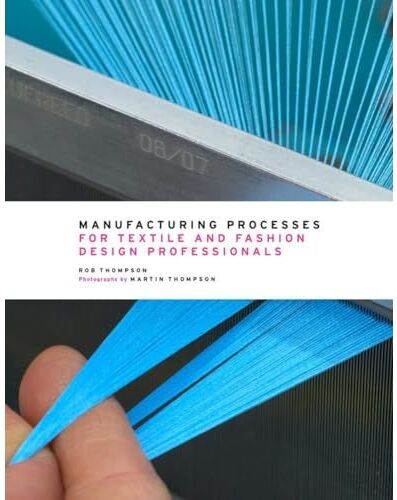
Thames and Hudson Ltd Manufacturing Processes for Textile and Fashion Design ProfessionalsThis fundamental resource for all textile and fashion designers explores over 70 production techniques and over 60 materials used in textile and fashion design. Organized into four main parts – Fibre and Yarn Technology, Textile Technology, Construction Technology, and Materials – it is a complete overview of the life cycle of textile and fashion manufacturing, from the spinning of yarn to recycling. In parts 1–3, over 70 major processes are explained in detail, each featuring a technical description, an analysis of the applications, design opportunities and considerations, quality, cost, speed and environmental impact. All of the processes feature detailed step-by-step case studies showing the process either at source or ‘in manufacture’ at a leading international supplier. Part 4 features essential knowledge on over 60 natural and synthetic materials.36,99 £*Shipping: 0,00 £Secure redirect to the provider
-
Why is sustainability important in the textile industry in emerging countries?
Sustainability is crucial in the textile industry in emerging countries for several reasons. Firstly, these countries often lack strict environmental regulations, leading to high levels of pollution and resource depletion. Implementing sustainable practices can help mitigate these negative impacts on the environment. Additionally, consumers worldwide are increasingly demanding ethically produced and environmentally friendly products, making sustainability a competitive advantage for companies in emerging countries. Lastly, adopting sustainable practices can improve the overall well-being of workers in the textile industry by ensuring safe working conditions and fair wages. **
-
What is retail textile?
Retail textile refers to the sale of fabrics, clothing, and other textile products directly to consumers through physical stores or online platforms. This sector includes a wide range of products such as apparel, home textiles, and accessories. Retail textile businesses often source their products from manufacturers and wholesalers, and then sell them to individual customers for personal use. The retail textile industry plays a significant role in the global economy and offers a diverse array of products to meet consumer needs and preferences. **
-
Are these textile beetles?
Without a specific image or description of the beetles in question, it is difficult to determine if they are textile beetles. Textile beetles, such as the varied carpet beetle and the black carpet beetle, are known for infesting and damaging textiles, carpets, and other natural fibers. If you suspect that you have textile beetles, it is best to consult with a pest control professional for proper identification and treatment. **
-
Is textile dye toxic?
Some textile dyes can be toxic, as they may contain harmful chemicals such as heavy metals, formaldehyde, and azo compounds. These toxic chemicals can have negative effects on human health and the environment, especially if they are not properly managed during the dyeing process and disposal. However, there are also eco-friendly and non-toxic textile dyes available that use natural and sustainable ingredients, making them a safer option for both consumers and the environment. It is important for consumers to be aware of the potential toxicity of textile dyes and to choose products that are certified as non-toxic and environmentally friendly. **
Similar search terms for Textile
-
Veer Decor Linea Textile WallpaperAdd refined texture and warmth to your walls with our Linea Textile wallpaper. Designed to mimic the quiet elegance of real linen, this wallpaper features a subtle horizontal emboss that captures the delicate weave and tactile richness of fine...169,99 $*Shipping: 0,00 $Secure redirect to the provider
-
Veer Decor Linea Textile WallpaperAdd refined texture and warmth to your walls with our Linea Textile wallpaper. Designed to mimic the quiet elegance of real linen, this wallpaper features a subtle horizontal emboss that captures the delicate weave and tactile richness of fine...169,99 $*Shipping: 0,00 $Secure redirect to the provider
-
Veer Decor Linea Textile WallpaperAdd refined texture and warmth to your walls with our Linea Textile wallpaper. Designed to mimic the quiet elegance of real linen, this wallpaper features a subtle horizontal emboss that captures the delicate weave and tactile richness of fine...169,99 $*Shipping: 0,00 $Secure redirect to the provider
-
Veer Decor Linea Textile WallpaperAdd refined texture and warmth to your walls with our Linea Textile wallpaper. Designed to mimic the quiet elegance of real linen, this wallpaper features a subtle horizontal emboss that captures the delicate weave and tactile richness of fine...169,99 $*Shipping: 0,00 $Secure redirect to the provider
-
What is a textile?
A textile is a flexible material made by weaving, knitting, crocheting, or felting natural or synthetic fibers. Textiles are used to create a wide range of products, including clothing, household items such as towels and bedding, and industrial products such as filters and reinforcements for composite materials. Textiles can be made from a variety of materials, including cotton, wool, silk, polyester, and nylon. **
-
'Leather suit or textile?'
The choice between a leather suit and a textile suit depends on the rider's preferences and riding style. Leather suits are known for their durability, abrasion resistance, and classic look, making them popular among sport and track riders. On the other hand, textile suits are often more versatile, offering waterproof and breathable features, making them suitable for various weather conditions and longer rides. Ultimately, the decision between a leather suit and a textile suit comes down to personal preference, riding environment, and budget. **
-
What are the effects of textile production on humans and the environment?
Textile production has significant effects on both humans and the environment. In terms of humans, the production process often involves exposure to harmful chemicals and dyes, leading to health issues such as respiratory problems, skin irritation, and even cancer. Additionally, the fast fashion industry's demand for cheap and quick production has led to poor working conditions and exploitation of labor in many developing countries. On the environmental front, textile production is resource-intensive, requiring large amounts of water, energy, and chemicals. This leads to water pollution, deforestation, greenhouse gas emissions, and waste generation. The use of synthetic fibers also contributes to microplastic pollution in oceans and soil. Overall, the textile industry has a significant impact on both human health and the environment, highlighting the need for more sustainable and ethical practices in the industry. **
-
What textile product is present?
The textile product present is a soft, cozy blanket. It is made of a plush material that provides warmth and comfort. The blanket is large enough to cover a bed or wrap around oneself, making it perfect for snuggling up on a cold day. Its quality and design make it a luxurious addition to any home. **
* All prices are inclusive of VAT and, if applicable, plus shipping costs. The offer information is based on the details provided by the respective shop and is updated through automated processes. Real-time updates do not occur, so deviations can occur in individual cases. ** Note: Parts of this content were created by AI.