Buy ennoia.eu ?
We are moving the project
ennoia.eu .
Are you interested in purchasing the domain
ennoia.eu ?
domain@kv-gmbh.de · 0541-91531010
Buy ennoia.eu ?
What is the difference between damping factor and damping mass?
Damping factor is a measure of how effectively a system can dissipate energy, and it is typically represented as a ratio of the actual damping in a system to the critical damping. Damping mass, on the other hand, refers to the mass that is used to dissipate energy in a system, such as in a vibration damping system. In other words, damping factor is a measure of the effectiveness of the damping in a system, while damping mass is the physical mass that is used to provide damping in a system. **
What is the damping factor?
The damping factor is a parameter used in engineering and physics to describe the rate at which oscillations in a system decay over time. It is a measure of how quickly the system returns to equilibrium after being disturbed. A higher damping factor indicates faster decay of oscillations, leading to a quicker stabilization of the system. In contrast, a lower damping factor results in slower decay of oscillations, potentially leading to prolonged oscillations or even instability in the system. **
Similar search terms for Damping
Top-Angebote
Products related to Damping:
-
ENVIRONMENT Diffuser Inspired by The Wynn Hotel® - 200mLVegan and cruelty-free. Diffuser that is inspired by The Wynn Hotel®. Juicy green melon and nectarine blend into a heart of jasmine and lily ending with notes of blackberry and oakmoss.39,28 $*Shipping: 0,00 $Secure redirect to the provider




-
How do you calculate the damping factor?
The damping factor can be calculated by dividing the actual damping coefficient of a system by the critical damping coefficient. The critical damping coefficient is calculated by multiplying the mass of the system by the square root of the spring constant. Once you have both values, you can divide the actual damping coefficient by the critical damping coefficient to determine the damping factor of the system. A damping factor greater than 1 indicates an overdamped system, a factor of 1 represents critical damping, and a factor less than 1 signifies an underdamped system. **
-
When does the damping ratio apply to vibrations?
The damping ratio applies to vibrations when there is damping present in the system. Damping is a force that opposes the motion of the vibrating system, causing the amplitude of the vibrations to decrease over time. The damping ratio is a measure of how quickly the vibrations in the system decay. A higher damping ratio indicates faster decay of vibrations, while a lower damping ratio indicates slower decay. **
-
What unit does damping have in harmonic oscillation?
Damping in harmonic oscillation is typically measured in units of velocity per unit of displacement, or in units of force per unit of velocity. This is because damping represents the rate at which the oscillation's energy is dissipated, which can be quantified in terms of the velocity or force acting on the oscillating system. Therefore, the unit of damping depends on the specific context and the physical quantities involved in the oscillation. **
-
What is the difference between damping and suspension?
Damping refers to the process of controlling the oscillations and vibrations in a vehicle by dissipating the kinetic energy. This is typically achieved through the use of shock absorbers or dampers. On the other hand, suspension refers to the system that supports the vehicle and its load, providing a smooth and controlled ride over uneven surfaces. The suspension system includes components such as springs, struts, and control arms, which work together to absorb shocks and maintain stability. In summary, damping is a specific aspect of the suspension system that focuses on controlling vibrations and oscillations, while suspension encompasses the entire system that supports the vehicle and provides a comfortable ride. **


What is a frequency-dependent damping multiswitch by Kathrein?
A frequency-dependent damping multiswitch by Kathrein is a device used in satellite and cable TV systems to distribute signals to multiple receivers. It is designed to minimize signal loss and interference by adjusting the damping level based on the frequency of the signal being transmitted. This helps to ensure that each receiver receives a strong and clear signal, improving overall system performance. The multiswitch is a crucial component in ensuring reliable and high-quality signal distribution in multi-dwelling units or commercial buildings. **
How do you calculate the damping in a simple pendulum?
The damping in a simple pendulum can be calculated by measuring the decrease in amplitude of the pendulum's oscillations over time. This can be done by recording the amplitude of the pendulum's swing at regular intervals and plotting a graph of amplitude against time. The damping can then be determined by fitting an exponential decay curve to the data and calculating the damping coefficient from the curve's equation. Another method is to measure the period of the pendulum's oscillations and observe how it changes over time, as the damping will cause the period to increase. **
Top-Angebote
Products related to Damping:
-
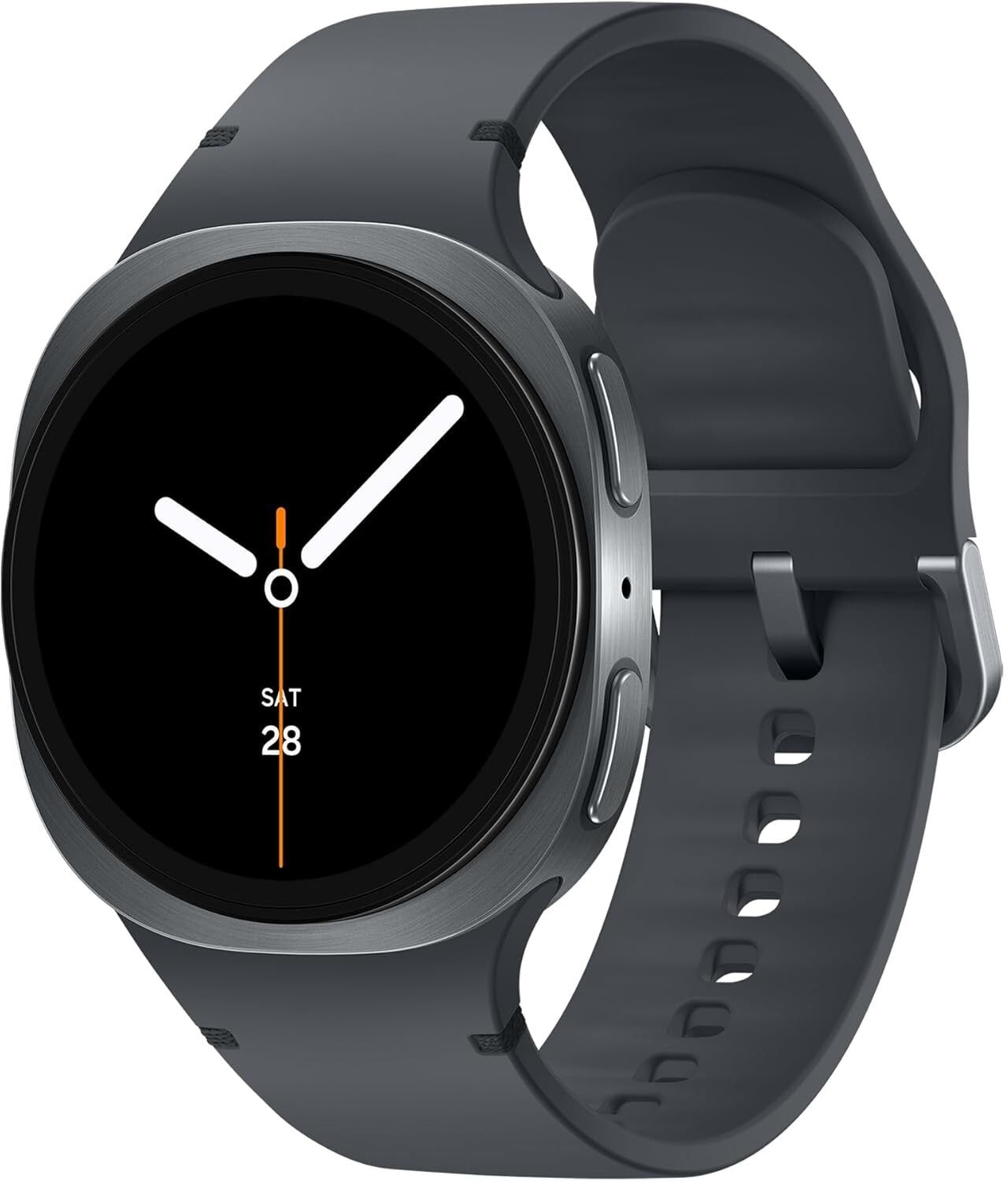
ECLAT Tech Ltd Samsung Galaxy Watch8 40mm Smartwatch – Graphite Galaxy AI Wellness & Intelligent Connectivity (Copy), NewMaster your schedule and your well-being with a device designed for the pace of modern life. The Samsung Galaxy Watch8 40mm in Graphite is more than an accessory; it is a sophisticated personal assistant that streamlines your daily digital workflow. By integrating cutting-edge Galaxy AI with a sleek, minimalist form factor, this watch (EAN 8806095908274) provides the tools you need to stay productive, informed, and physically optimised without the distraction of a smartphone. Whether you are in a high-stakes meeting or a focused training session, the Galaxy Watch8 ensures you remain at the peak of your professional and personal performance. Key Features & Benefits Intelligent Biological Forecasting: The 2025-edition Galaxy AI analyses your sleep, heart rate, and activity levels to provide a morning "Readiness Score," letting you know when to push for results and when to prioritising recovery for maximum productivity. Discrete Professional Management: Real-time smart notifications allow you to screen urgent emails and messages with a glance, ensuring you remain present in your workspace while never missing a critical update. Precision Body Composition Analysis: The integrated BioActive Sensor provides instant feedback on body fat, skeletal muscle, and water weight, empowering you to make data-driven decisions about your nutrition and fitness regime. Sophisticated All-Day Comfort: The 40mm Graphite aluminium case is incredibly lightweight and low-profile, ensuring it slides effortlessly under a tailored suit cuff or casual evening wear for seamless transitions. Reliable Sleep Optimization: Advanced sleep-tracking technology monitors oxygen levels and snoring patterns to offer bespoke coaching, helping you achieve the deep restorative rest required for elite cognitive performance. Scratch-Resistant Longevity: A premium Sapphire Crystal display offers superior durability against the bumps and scrapes of city life, maintaining a pristine, high-end look for years to come. Why Choose This Product The Samsung Galaxy Watch8 is the definitive choice for the urban professional who values clinical precision and understated elegance. While larger wearables can feel cumbersome, the 40mm Graphite model offers a sophisticated, minimalist aesthetic that complements any professional attire. This watch represents an emotional and professional investment in yourself; it eliminates "data overwhelm" by translating complex health metrics into simple, actionable advice. Choosing the Galaxy Watch8 (EAN 8806095908274) means choosing a more efficient version of your day, where technology works silently in the background to keep you healthy, connected, and focused on your career goals. Specification Details Model Samsung Galaxy Watch8 (40mm) EAN 8806095908274 Sensor Samsung BioActive Sensor (PPG, ECG, BIA) Buttons Dual Action Buttons + Touch Bezel Battery Fast-Charging Lithium-Ion (Up to 40 hours) Dimensions 40.4 x 39.3 x 9.8 mm Weight Approx. 28.7g (Without...310,00 £*Shipping: 0,00 £Secure redirect to the provider
-
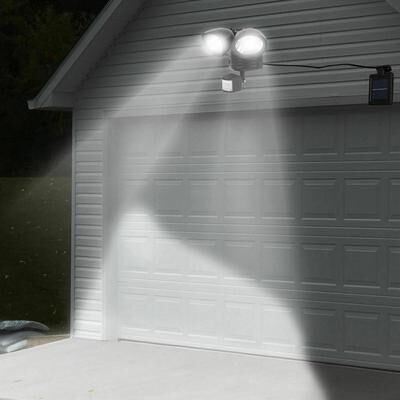
All Categories Goods LED Solar Security Light Dual Motion Sensor Outdoor Floodlight With LED Technology For Energy Efficient Illumination LED Solar Security Light Dual Motion Sensor Outdoor Floodlight With LED Technology For Energy Efficient IlluminationBrighten your outdoor space with the 1 pcs of 22 LED Solar Security Light, designed for maximum visibility and security. Powered by ecofriendly solar energy, this motion sensor floodlight activates when movement is detected, offering both...63,97 $*Shipping: 0,00 $Secure redirect to the provider
-
What is the difference between damping factor and damping mass?
Damping factor is a measure of how effectively a system can dissipate energy, and it is typically represented as a ratio of the actual damping in a system to the critical damping. Damping mass, on the other hand, refers to the mass that is used to dissipate energy in a system, such as in a vibration damping system. In other words, damping factor is a measure of the effectiveness of the damping in a system, while damping mass is the physical mass that is used to provide damping in a system. **
-
What is the damping factor?
The damping factor is a parameter used in engineering and physics to describe the rate at which oscillations in a system decay over time. It is a measure of how quickly the system returns to equilibrium after being disturbed. A higher damping factor indicates faster decay of oscillations, leading to a quicker stabilization of the system. In contrast, a lower damping factor results in slower decay of oscillations, potentially leading to prolonged oscillations or even instability in the system. **
-
How do you calculate the damping factor?
The damping factor can be calculated by dividing the actual damping coefficient of a system by the critical damping coefficient. The critical damping coefficient is calculated by multiplying the mass of the system by the square root of the spring constant. Once you have both values, you can divide the actual damping coefficient by the critical damping coefficient to determine the damping factor of the system. A damping factor greater than 1 indicates an overdamped system, a factor of 1 represents critical damping, and a factor less than 1 signifies an underdamped system. **
-
When does the damping ratio apply to vibrations?
The damping ratio applies to vibrations when there is damping present in the system. Damping is a force that opposes the motion of the vibrating system, causing the amplitude of the vibrations to decrease over time. The damping ratio is a measure of how quickly the vibrations in the system decay. A higher damping ratio indicates faster decay of vibrations, while a lower damping ratio indicates slower decay. **
Similar search terms for Damping
-
ENVIRONMENT Diffuser Inspired by The Wynn Hotel® - 200mLVegan and cruelty-free. Diffuser that is inspired by The Wynn Hotel®. Juicy green melon and nectarine blend into a heart of jasmine and lily ending with notes of blackberry and oakmoss.39,28 $*Shipping: 0,00 $Secure redirect to the provider
-
HARPERCOLLINS Creative Confidence by Tom & David Kelley – Unleashing Your Creative Potential & Innovation MindsetA powerful and inspiring book from the founders of IDEO, the award-winning design firm, on unleashing the creativity that lies within each and every one of us. Too often, companies and individuals assume that creativity and innovation are the domain of the ‘creative types’. But two of the foremost experts in innovation, design and creativity on the planet show us that each and every one of us is creative. In an entertaining and inspiring narrative that draws on countless stories from their work at IDEO, and with many of the world's top companies and design firms, David and Tom Kelley identify the principles and strategies that will allow us to tap into our creative potential in our work lives, and in our personal lives, allow us to think outside the box in terms of how we approach and solve problems. ‘Creative Confidence’ is a book that will help each of us be more productive and successful in our lives and in our careers.4,95 £*Shipping: 1,99 £Secure redirect to the provider
-
Uplift Essentials Armband Heart Rate Monitor With Bluetooth 5.0 And ANT+ Connectivity Armband Heart Rate Monitor With Bluetooth 5.0 And ANT+ ConnectivityTrain smarter and safer with this armband heart rate monitor featuring accurate optical HR tracking, calorie burn monitoring, and heart rate zone feedback. Designed for fitness enthusiasts, cyclists, and athletes, this device connects seamlessly to...126,97 $*Shipping: 0,00 $Secure redirect to the provider
-
What unit does damping have in harmonic oscillation?
Damping in harmonic oscillation is typically measured in units of velocity per unit of displacement, or in units of force per unit of velocity. This is because damping represents the rate at which the oscillation's energy is dissipated, which can be quantified in terms of the velocity or force acting on the oscillating system. Therefore, the unit of damping depends on the specific context and the physical quantities involved in the oscillation. **
-
What is the difference between damping and suspension?
Damping refers to the process of controlling the oscillations and vibrations in a vehicle by dissipating the kinetic energy. This is typically achieved through the use of shock absorbers or dampers. On the other hand, suspension refers to the system that supports the vehicle and its load, providing a smooth and controlled ride over uneven surfaces. The suspension system includes components such as springs, struts, and control arms, which work together to absorb shocks and maintain stability. In summary, damping is a specific aspect of the suspension system that focuses on controlling vibrations and oscillations, while suspension encompasses the entire system that supports the vehicle and provides a comfortable ride. **
-
What is a frequency-dependent damping multiswitch by Kathrein?
A frequency-dependent damping multiswitch by Kathrein is a device used in satellite and cable TV systems to distribute signals to multiple receivers. It is designed to minimize signal loss and interference by adjusting the damping level based on the frequency of the signal being transmitted. This helps to ensure that each receiver receives a strong and clear signal, improving overall system performance. The multiswitch is a crucial component in ensuring reliable and high-quality signal distribution in multi-dwelling units or commercial buildings. **
-
How do you calculate the damping in a simple pendulum?
The damping in a simple pendulum can be calculated by measuring the decrease in amplitude of the pendulum's oscillations over time. This can be done by recording the amplitude of the pendulum's swing at regular intervals and plotting a graph of amplitude against time. The damping can then be determined by fitting an exponential decay curve to the data and calculating the damping coefficient from the curve's equation. Another method is to measure the period of the pendulum's oscillations and observe how it changes over time, as the damping will cause the period to increase. **
* All prices are inclusive of VAT and, if applicable, plus shipping costs. The offer information is based on the details provided by the respective shop and is updated through automated processes. Real-time updates do not occur, so deviations can occur in individual cases. ** Note: Parts of this content were created by AI.