Buy ennoia.eu ?
We are moving the project
ennoia.eu .
Are you interested in purchasing the domain
ennoia.eu ?
domain@kv-gmbh.de · 0541-91531010
Buy ennoia.eu ?
What is Physics 1120?
Physics 1120 is a course that typically covers topics in electricity and magnetism at the introductory level. Students will learn about fundamental concepts such as electric fields, magnetic fields, circuits, and electromagnetic waves. The course may also include discussions on topics like electromagnetic induction, electric potential, and basic principles of optics. Physics 1120 is designed to provide students with a foundational understanding of these concepts and their applications in the physical world. **
What is the difference between a power take-off shaft and a drive shaft?
A power take-off (PTO) shaft is a type of drive shaft that transfers power from a vehicle's engine to an attachment or implement, such as a pump or generator. The main difference between a PTO shaft and a regular drive shaft is that a PTO shaft is specifically designed to transfer power to external equipment, while a drive shaft is typically used to transfer power within a vehicle's transmission or between different components of a vehicle. Additionally, PTO shafts are often detachable and can be connected and disconnected as needed, whereas a drive shaft is a permanent component of a vehicle's drivetrain. **

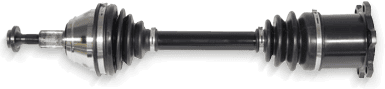
Similar search terms for MAXGEAR-49-1120-Drive-shaft
Top-Angebote
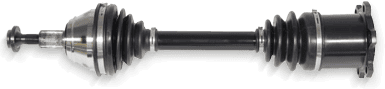
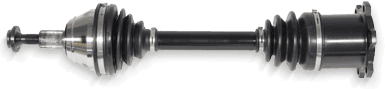
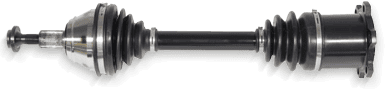
Products related to MAXGEAR-49-1120-Drive-shaft:
-
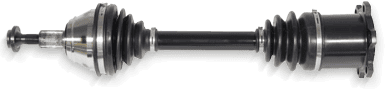
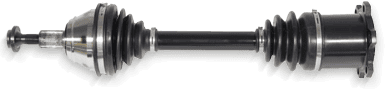
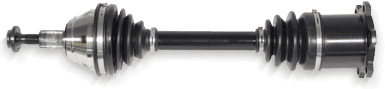
MAXGEAR 49-1178 Drive shaftExternal Toothing differential side: 23; External Toothing wheel side: 23; Length [mm]: 721; Diameter 1 [mm]: 84, 83,6; Number of Teeth, ABS ring: 26; Fitting Position: Front Axle Right; Transmission Type: Manual Transmission; Construction Year to: 10/2002; Transmission Code: JB1/3, JB1; Braking/Driving Dynamics: for vehicles with ABS89,49 £*Shipping: 8,45 £Secure redirect to the provider
-
MAXGEAR 49-1207 Drive shaftFitting Position: Front Axle Left; Weight [kg]: 7,4; External Toothing wheel side: 26; External Toothing differential side: 24; Seal Ring Diameter [mm]: 58; Length [mm]: 615; Transmission Type: 4-Speed Automatic Transmission112,99 £*Shipping: 8,45 £Secure redirect to the provider
-
MAXGEAR 49-2270 Drive shaftExternal Toothing wheel side: 30; Length [mm]: 635; Transmission-sided joint diameter [mm]: 101, 101,0; Wheel-sided joint diameter [mm]: 94; ABS-Ring Diameter [mm]: 98; Number of Teeth, ABS ring: 48; Thread Size: M27x1,5; Bore Diameter [mm]: 9,90; Number of bores: 6; Bolt Hole Circle Ø [mm]: 81,00; Fitting Position: Rear Axle Left; Transmission Type: Semi-automatic, Automatic Transmission; Construction Year to: 09/2000107,99 £*Shipping: 8,45 £Secure redirect to the provider
-
MAXGEAR 49-2298 Drive shaftExternal Toothing differential side: 32; External Toothing wheel side: 30; Exchange Part: ; Length [mm]: 834; Transmission-sided joint diameter [mm]: 88; Wheel-sided joint diameter [mm]: 88; Thread Size: M27x1,5; Fitting Position: Rear Axle Right; Vehicle Equipment: for vehicles without trailer hitch; Transmission Type: Automatic Transmission, 8-Speed Automatic Transmission135,99 £*Shipping: 1,99 £Secure redirect to the provider
-
Why are there no simple motorcycles with shaft drive or belt drive?
There are no simple motorcycles with shaft drive or belt drive because these systems are more complex and expensive to manufacture compared to chain drive systems. Chain drives are simpler, lighter, and more cost-effective, making them the preferred choice for most motorcycles. Additionally, chain drives offer easier maintenance and customization options, which are important factors for many motorcycle enthusiasts. Overall, the simplicity and efficiency of chain drives make them the more popular choice in the motorcycle industry. **
-
What are suggestions for improvement for 1120?
Some suggestions for improvement for 1120 could include enhancing the user interface to make it more intuitive and user-friendly, providing more detailed instructions or tutorials for new users, and implementing a feature that allows for easier collaboration among team members. Additionally, adding more customization options and integrations with other tools could help enhance the overall user experience and make 1120 even more versatile for different types of projects. Regular updates and bug fixes based on user feedback would also be beneficial in improving the overall performance and functionality of 1120. **
-
How to calculate the moment of inertia of the drive shaft?
To calculate the moment of inertia of the drive shaft, you need to know the mass of the shaft and its distribution along its length. The moment of inertia can be calculated using the formula I = ∫r^2 dm, where r is the distance from the axis of rotation to the element of mass dm. By integrating this formula over the entire length of the shaft, you can determine the moment of inertia of the drive shaft. Alternatively, you can also use the parallel axis theorem to calculate the moment of inertia if the shaft is not rotating about its center of mass. **
-
How do you calculate the moment of inertia of the drive shaft?
The moment of inertia of a drive shaft can be calculated using the formula for the moment of inertia of a solid cylinder, which is \( I = \frac{1}{2} m r^2 \), where \( m \) is the mass of the shaft and \( r \) is the radius of the shaft. If the drive shaft is not a solid cylinder, the moment of inertia can be calculated by summing the moments of inertia of its individual components using the parallel axis theorem. This involves calculating the moment of inertia of each component about its own center of mass and then adding the mass of each component multiplied by the square of the distance between its center of mass and the axis of rotation. **
How does a 49-ticket contribute to the environment?
A 49-ticket can contribute to the environment by promoting the use of public transportation, which helps reduce the number of individual cars on the road and lowers carbon emissions. By choosing to use a 49-ticket, individuals are supporting a more sustainable mode of transportation that can help decrease air pollution and traffic congestion. Additionally, public transportation systems often have more fuel-efficient vehicles, further reducing their environmental impact compared to personal vehicles. **
What is the air pressure in the John Deere 1120?
The air pressure in the John Deere 1120 tractor's tires can vary depending on the specific model and the type of tires being used. However, the recommended air pressure for the front tires is typically around 18-20 psi, while the rear tires may require around 24-26 psi. It is important to consult the owner's manual or the tire manufacturer's recommendations to ensure the correct air pressure is maintained for optimal performance and safety. **
Top-Angebote
Products related to MAXGEAR-49-1120-Drive-shaft:
-
MAXGEAR 49-1180 Drive shaftExternal Toothing wheel side: 23; Internal Gearing Diff. Side (connecting shaft connection): 23; Length [mm]: 740; Diameter 1 [mm]: 82, 82,3; Diameter 2 [mm]: 70; Number of Teeth, ABS ring: 44; Fitting Position: Front Axle Right; Transmission Type: Manual Transmission; Transmission Code: JB1/3; Construction Year to: 12/2007, 12/2008; Braking/Driving Dynamics: for vehicles with ABS160,99 £*Shipping: 1,99 £Secure redirect to the provider
-
MAXGEAR 49-1178 Drive shaftExternal Toothing differential side: 23; External Toothing wheel side: 23; Length [mm]: 721; Diameter 1 [mm]: 84, 83,6; Number of Teeth, ABS ring: 26; Fitting Position: Front Axle Right; Transmission Type: Manual Transmission; Construction Year to: 10/2002; Transmission Code: JB1/3, JB1; Braking/Driving Dynamics: for vehicles with ABS89,49 £*Shipping: 8,45 £Secure redirect to the provider
-
MAXGEAR 49-1207 Drive shaftFitting Position: Front Axle Left; Weight [kg]: 7,4; External Toothing wheel side: 26; External Toothing differential side: 24; Seal Ring Diameter [mm]: 58; Length [mm]: 615; Transmission Type: 4-Speed Automatic Transmission112,99 £*Shipping: 8,45 £Secure redirect to the provider
-
What is Physics 1120?
Physics 1120 is a course that typically covers topics in electricity and magnetism at the introductory level. Students will learn about fundamental concepts such as electric fields, magnetic fields, circuits, and electromagnetic waves. The course may also include discussions on topics like electromagnetic induction, electric potential, and basic principles of optics. Physics 1120 is designed to provide students with a foundational understanding of these concepts and their applications in the physical world. **
-
What is the difference between a power take-off shaft and a drive shaft?
A power take-off (PTO) shaft is a type of drive shaft that transfers power from a vehicle's engine to an attachment or implement, such as a pump or generator. The main difference between a PTO shaft and a regular drive shaft is that a PTO shaft is specifically designed to transfer power to external equipment, while a drive shaft is typically used to transfer power within a vehicle's transmission or between different components of a vehicle. Additionally, PTO shafts are often detachable and can be connected and disconnected as needed, whereas a drive shaft is a permanent component of a vehicle's drivetrain. **
-
Why are there no simple motorcycles with shaft drive or belt drive?
There are no simple motorcycles with shaft drive or belt drive because these systems are more complex and expensive to manufacture compared to chain drive systems. Chain drives are simpler, lighter, and more cost-effective, making them the preferred choice for most motorcycles. Additionally, chain drives offer easier maintenance and customization options, which are important factors for many motorcycle enthusiasts. Overall, the simplicity and efficiency of chain drives make them the more popular choice in the motorcycle industry. **
-
What are suggestions for improvement for 1120?
Some suggestions for improvement for 1120 could include enhancing the user interface to make it more intuitive and user-friendly, providing more detailed instructions or tutorials for new users, and implementing a feature that allows for easier collaboration among team members. Additionally, adding more customization options and integrations with other tools could help enhance the overall user experience and make 1120 even more versatile for different types of projects. Regular updates and bug fixes based on user feedback would also be beneficial in improving the overall performance and functionality of 1120. **
Similar search terms for MAXGEAR-49-1120-Drive-shaft
-
MAXGEAR 49-2270 Drive shaftExternal Toothing wheel side: 30; Length [mm]: 635; Transmission-sided joint diameter [mm]: 101, 101,0; Wheel-sided joint diameter [mm]: 94; ABS-Ring Diameter [mm]: 98; Number of Teeth, ABS ring: 48; Thread Size: M27x1,5; Bore Diameter [mm]: 9,90; Number of bores: 6; Bolt Hole Circle Ø [mm]: 81,00; Fitting Position: Rear Axle Left; Transmission Type: Semi-automatic, Automatic Transmission; Construction Year to: 09/2000107,99 £*Shipping: 8,45 £Secure redirect to the provider
-
MAXGEAR 49-2298 Drive shaftExternal Toothing differential side: 32; External Toothing wheel side: 30; Exchange Part: ; Length [mm]: 834; Transmission-sided joint diameter [mm]: 88; Wheel-sided joint diameter [mm]: 88; Thread Size: M27x1,5; Fitting Position: Rear Axle Right; Vehicle Equipment: for vehicles without trailer hitch; Transmission Type: Automatic Transmission, 8-Speed Automatic Transmission135,99 £*Shipping: 1,99 £Secure redirect to the provider
-
MAXGEAR 49-2300 Drive shaftFitting Position: Rear Axle Right; External Toothing differential side: 27; External Toothing wheel side: 30; Length [mm]: 817; Length 2 [mm]: 75; Transmission-sided joint diameter [mm]: 88; Wheel-sided joint diameter [mm]: 88; Transmission Type: Manual Transmission, Fully Automatic114,99 £*Shipping: 8,45 £Secure redirect to the provider
-
MAXGEAR 49-2305 Drive shaftFitting Position: Rear Axle; Fitting Position: Rear Axle Left, Rear Axle Right; External Toothing wheel side: 30; Length [mm]: 637; Transmission-sided joint diameter [mm]: 106, 106,0; Wheel-sided joint diameter [mm]: 94; Thread Size: M27x1,5; Bore Diameter [mm]: 10,20; Number of bores: 6; Bolt Hole Circle Ø [mm]: 86,00; Construction Year from: 04/2010, 08/2009, 06/2015; Suspension: for vehicles with electronic suspension control; Transmission Type: Automatic Transmission, 8-Speed Automatic Transmission; for special equipment code: S2VPA; Vehicle Equipment: for vehicles without trailer hitch200,99 £*Shipping: 1,99 £Secure redirect to the provider
-
How to calculate the moment of inertia of the drive shaft?
To calculate the moment of inertia of the drive shaft, you need to know the mass of the shaft and its distribution along its length. The moment of inertia can be calculated using the formula I = ∫r^2 dm, where r is the distance from the axis of rotation to the element of mass dm. By integrating this formula over the entire length of the shaft, you can determine the moment of inertia of the drive shaft. Alternatively, you can also use the parallel axis theorem to calculate the moment of inertia if the shaft is not rotating about its center of mass. **
-
How do you calculate the moment of inertia of the drive shaft?
The moment of inertia of a drive shaft can be calculated using the formula for the moment of inertia of a solid cylinder, which is \( I = \frac{1}{2} m r^2 \), where \( m \) is the mass of the shaft and \( r \) is the radius of the shaft. If the drive shaft is not a solid cylinder, the moment of inertia can be calculated by summing the moments of inertia of its individual components using the parallel axis theorem. This involves calculating the moment of inertia of each component about its own center of mass and then adding the mass of each component multiplied by the square of the distance between its center of mass and the axis of rotation. **
-
How does a 49-ticket contribute to the environment?
A 49-ticket can contribute to the environment by promoting the use of public transportation, which helps reduce the number of individual cars on the road and lowers carbon emissions. By choosing to use a 49-ticket, individuals are supporting a more sustainable mode of transportation that can help decrease air pollution and traffic congestion. Additionally, public transportation systems often have more fuel-efficient vehicles, further reducing their environmental impact compared to personal vehicles. **
-
What is the air pressure in the John Deere 1120?
The air pressure in the John Deere 1120 tractor's tires can vary depending on the specific model and the type of tires being used. However, the recommended air pressure for the front tires is typically around 18-20 psi, while the rear tires may require around 24-26 psi. It is important to consult the owner's manual or the tire manufacturer's recommendations to ensure the correct air pressure is maintained for optimal performance and safety. **
* All prices are inclusive of VAT and, if applicable, plus shipping costs. The offer information is based on the details provided by the respective shop and is updated through automated processes. Real-time updates do not occur, so deviations can occur in individual cases. ** Note: Parts of this content were created by AI.